Forensic Evaluations
What Makes an Evaluation Forensic?
For a report or evaluation to be forensic four elements are necessary, including: 1) clinical interviews , 2) collateral interviews, 3) psychometric tests and measures, and 4) records/documents review.
Clinical Interviews
Clinical interviews are done by a recognized professional. They typically include a bio-psycho social history and other questions to the main person to be evaluated. Clinical interviews then form an important data point and gives the evaluator needed information. If this involved individual counseling or treatment, such an interview would be adequate. However, more information is needed in a Forensic evaluation.
Collateral Interviews
Additional data points and perspectives are needed. Collateral interviews can provide such insight. These can be people close to the main person to be investigated. Such people have their own perspectives and views. These original views are important to the evaluator. Often they can provide independent witness and testimony that is greater than hearsay from the main person being examined. For this reason, such interviews are needed supportive data points for an evaluation. Yet, they are not enough.
Psychometric Tests and Measures
Psychometric testing can provide insightful and independent data points for the forensic report. Generally, these tests are scientifically validated and accepted by the court and the professional community. They are given weight against others who have also been tested. Scores are examined compared to similar others and are measured as being normal (within one standard deviation from the mean), moderately above (within two standard deviations from the mean), markedly elevated (within three standard deviations from the mean), and even extremely elevated (within four standard deviations from the mean). As a general rule, 68% of people are found within one standard deviation from the mean; 95% of people are found within two standard deviations from the mean; 99.7% are found within three standard deviations from the mean. Hence, scores on such testing can add addition weight to a full rounded forensic investigative report.
Records/Documents Review
Police reports, DCFS investigations, text messages demonstrating the expressed concern, photos showing evidence of the concern, professional reports, therapeutic notes, and other documents then show additional data points. Of themselves they may not be much but when all four of these forensic necessities are combined they can form a preponderance of evidence. Preponderance of evidence is necessary and useful in a court that functions under the rule of law. Such rule of law basis is the backbone of a free society of equal individuals under the blind and unseeing eyes of the lady of justice (Themis) who symbolizes equity among equal individuals.
Did your Evaluation Contain All These Forensic Necesities?
The main reason that forensic investigative reports/evaluations cost so much is due to the rigors required by their very nature. Such reports typically speak for themselves and do not need a great weight of opinion from the investigator. For this reason, our evaluators seek to disappear in their opinions and merely weigh and measure the data points according to factors to be considered in the various evaluations. Make sure your report (and the entire process) contains these four elements.
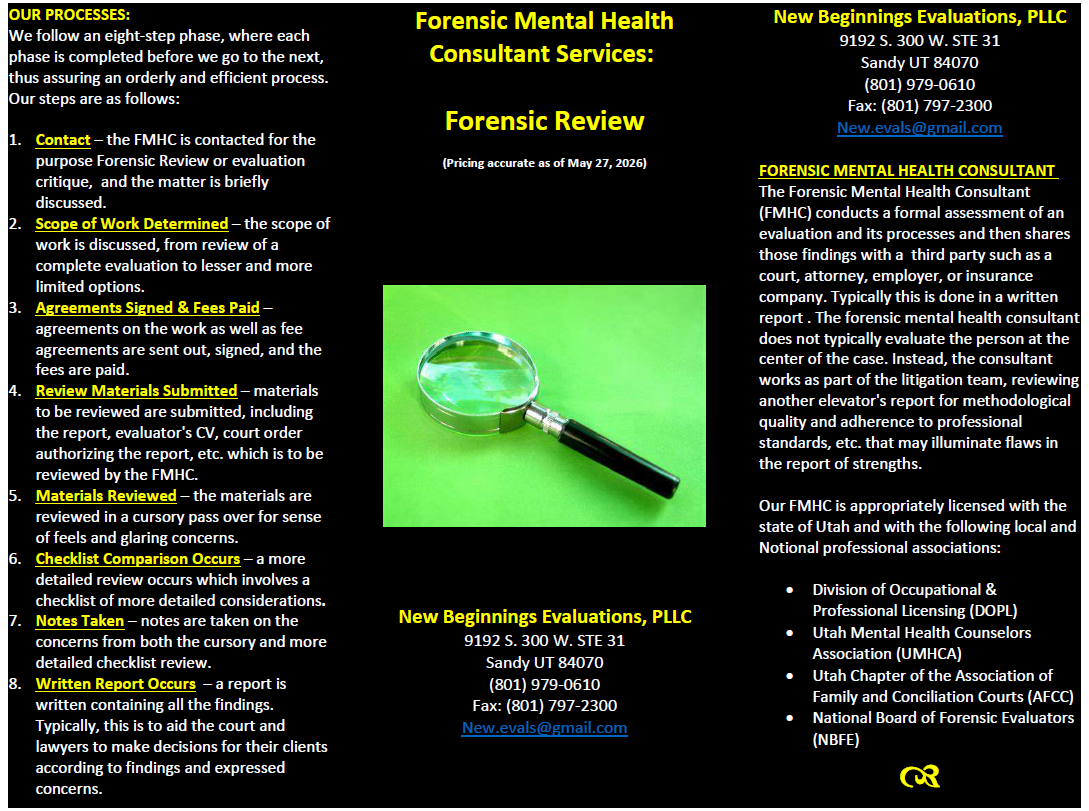
Forensic Review Report Steps
-

1. Contact: Need for Forensic Review
An evaluation has been done. There is sufficient reason to believe the evaluator was biased. In short, justice hasn’t been served. Time to contact the Forensic Reviewer!
-

2. Scope of Work Determined
Discuss with the Forensic Reviewer the scope of work to be considered. is discussed, from review of a completed evaluation to lesser and more limited options.
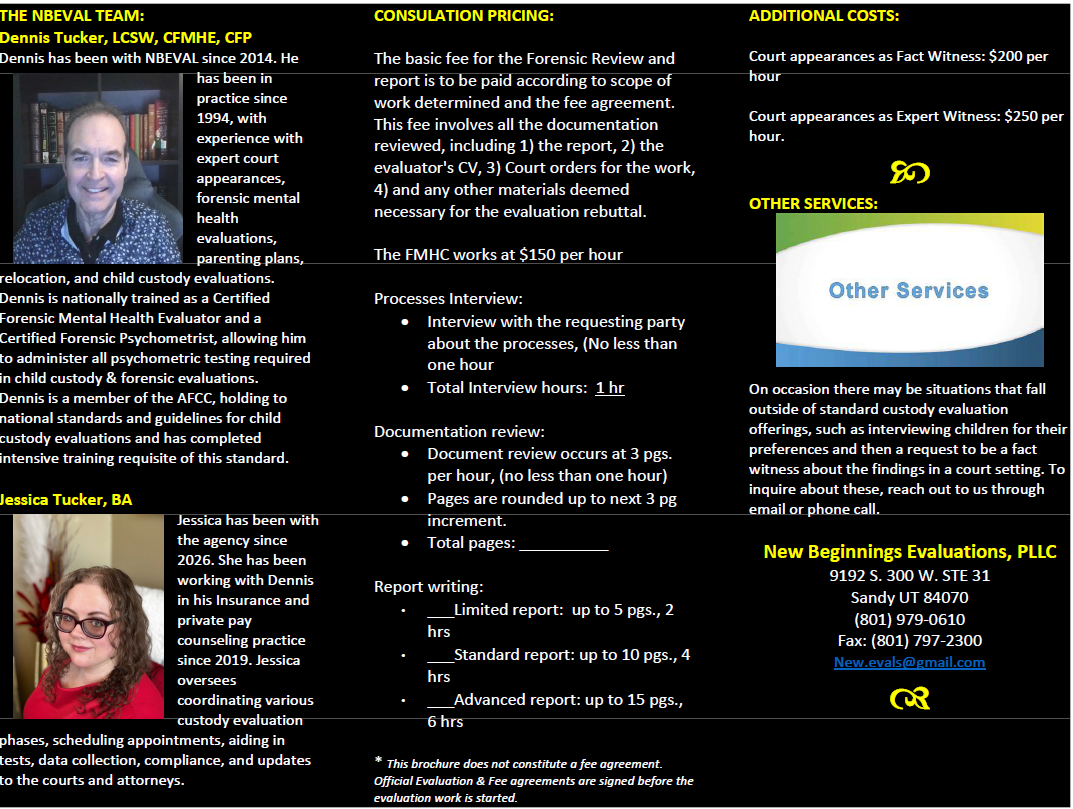
* Interview time: 1 hour.
-

3. Agreements Signed & Fees Paid
Agreements on the work as well as fee agreements are sent out, signed, and the fees are paid.
* Simple formula: ((Initial interview + Calculated hours for report review + write-up) x $150 per hour = Total fee)
-

4. All Materials to Be Reviewed Submitted
All materials to be reviewed are submitted which is to be reviewed by the Certified Forensic Mental Health Consultant (CFMHC).
-

5. Checklist Comparison Occurs
A detailed review occurs against a checklist of 23 Forensic value and worth considerations.
-
6. Notes Taken
Notes are taken on the concerns from the initial interview, the written evaluation overview, and the detailed checklist comparison. These notes are to be used in the write up.
-

7. Written Report Occurs
A report is written containing all the findings. Typically, this is to aid the court and lawyers to make decisions for their clients according to findings and expressed concerns. A forensic worth and value rating is assigned to the rebutted evaluation.
-

8. Product Delivered
The written report is delivered by the agreed upon deadline (Typically 45 days from fees paid).